Plugged Out: The Hidden Cost of the Digital Divide in the Bowe Community—and the Innovations Closing the Gap
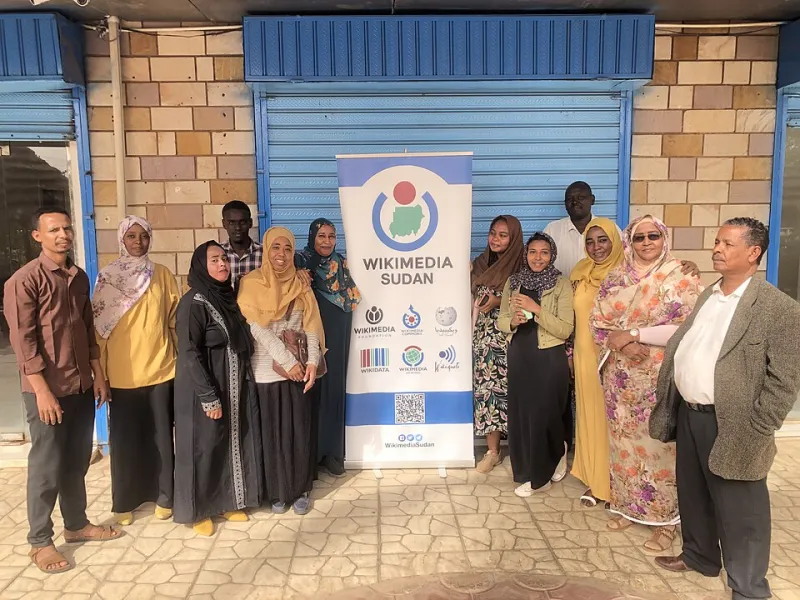
Photo: Hassan Hassoon, CC BY-SA 4.0, via Wikimedia Commons
Imagine being told that a job you are fully qualified for requires submitting an online application—only to discover that your home internet connection is too slow to load the employer's website reliably, or that you have no home connection at all. Imagine a high school student attempting to complete a research assignment from a smartphone with a limited data plan, or a senior citizen unable to access a telehealth appointment because the broadband infrastructure in their neighborhood simply does not support video calls.
For far too many residents of the Bowe community, these are not hypothetical scenarios. They are Tuesday afternoons.
The digital divide—the gap between those with robust, affordable internet access and those without—has widened into one of the most consequential equity issues of our time. As virtually every domain of modern life has migrated online, from employment and education to health care and civic engagement, the absence of reliable connectivity has become a form of structural exclusion. In Bowe, that exclusion is visible, measurable, and urgently in need of redress.
Who Gets Left Behind—and Why
Broadband inequality does not distribute itself randomly. It clusters along familiar lines: income, geography, and race. Rural and low-income urban areas consistently lag behind wealthier communities in both the availability and affordability of high-speed internet service. The Federal Communications Commission's own data—frequently criticized for overstating coverage—still documents significant gaps in communities with demographic profiles similar to Bowe's.
For Bowe residents, the barriers to connectivity are layered. Infrastructure investment by private internet service providers has historically followed population density and purchasing power, leaving lower-income neighborhoods underserved. Even where service is technically available, monthly subscription costs can represent a prohibitive share of a household's budget. Devices present a further obstacle: a household without a laptop or tablet is functionally offline even if broadband service exists nearby.
The result is a community that is digitally stratified—with some residents enjoying seamless connectivity while neighbors a few blocks away struggle to maintain a stable signal.
What Disconnection Actually Costs
The consequences of digital exclusion extend well beyond inconvenience, and they fall disproportionately on Bowe's youngest and most vulnerable residents.
For students, the stakes became viscerally apparent during the COVID-19 pandemic, when remote learning exposed the depth of the digital divide in stark terms. Schools shifted online overnight, and students without reliable home internet were left to manage as best they could—often through patchy mobile connections, borrowed devices, or crowded public spaces. Learning loss attributable to inadequate technology access during that period will take years to fully measure and longer still to remediate.
But the educational impact did not begin with the pandemic, nor has it ended. Today, homework assignments, college applications, scholarship portals, and dual-enrollment programs are overwhelmingly digital. A student without reliable internet access at home is not simply inconvenienced—they are operating at a structural disadvantage relative to their connected peers.
For working-age adults, digital exclusion translates directly into narrowed economic opportunity. Remote and hybrid work arrangements—once a corporate novelty—have become standard across entire industries. Job listings increasingly require applicants to complete online assessments, submit digital portfolios, or attend video interviews. A Bowe resident without reliable broadband is effectively screened out before the process begins.
Telehealth, which expanded dramatically in recent years and has proven especially valuable for residents in areas with limited in-person medical options, also depends on connectivity. For elderly Bowe residents or those managing chronic conditions, an unreliable internet connection can mean the difference between consistent medical oversight and going without care.
Local Innovations Worth Watching
Across the Bowe community, a number of grassroots and institutional responses to the digital divide are beginning to demonstrate what is possible when the problem is treated with the seriousness it deserves.
Community wireless networks—locally owned and operated broadband infrastructure built to serve neighborhoods rather than shareholders—have emerged in several underserved areas of the country as a viable alternative to corporate providers. Advocates in Bowe are exploring similar models, partnering with municipal governments and regional cooperatives to develop infrastructure that prioritizes coverage over profit margins.
Device lending programs, operated through schools, libraries, and community organizations, have placed laptops and tablets in the hands of Bowe families who could not otherwise afford them. Some programs bundle devices with subsidized data plans, addressing both halves of the connectivity equation simultaneously.
Digital literacy training has also proven to be a critical complement to infrastructure investment. Access to a device and a broadband connection means little if residents lack the skills to use them effectively. Workshops offered through Bowe-area community centers and libraries are equipping residents—particularly older adults and recent immigrants—with the practical competencies needed to navigate online job boards, government services, educational platforms, and telehealth portals.
Youth-focused initiatives deserve particular attention. Programs that train young Bowe residents as community technology navigators—peer educators who help neighbors troubleshoot devices, identify low-cost service options, and access digital resources—simultaneously address the connectivity gap and cultivate leadership skills among participants. This dual impact aligns directly with Support Bowe's commitment to developing the next generation of community advocates.
Policy Imperatives
Infrastructure and programming alone cannot resolve a structural problem without supportive policy. Advocates working on behalf of the Bowe community have identified several priority areas for action at the local, state, and federal levels.
First, public investment in broadband infrastructure must be directed toward underserved communities rather than areas that private providers would serve regardless. Federal programs such as the Broadband Equity, Access, and Deployment (BEAD) Program represent meaningful resources, but their impact depends on how states and localities prioritize distribution.
Second, affordability programs must be strengthened and made easier to access. The Affordable Connectivity Program demonstrated real potential before its funding lapsed—its restoration and expansion would benefit thousands of Bowe households.
Third, digital equity must be formally integrated into community development planning. When local governments and nonprofit organizations assess the needs of communities like Bowe, broadband access should appear alongside housing, employment, and health care as a recognized determinant of resident well-being.
A Connected Community Is a Stronger Community
The Bowe community's capacity to thrive in the twenty-first century is inseparable from its capacity to participate in the digital economy and digital civic life. Every resident who remains disconnected represents not only a personal disadvantage but a collective loss—a student whose potential goes unrealized, a worker whose skills go undeployed, a voice that goes unheard in online civic spaces.
Support Bowe believes that digital equity is not a luxury add-on to community development work. It is a prerequisite. Closing the digital divide in Bowe requires sustained investment, creative problem-solving, and the political will to treat connectivity as the public good it has become. The tools and models exist. What is needed now is the commitment to deploy them at scale.