Unlocking the Classroom Door: How Bowe's Educational Access Movement Is Reshaping Student Futures
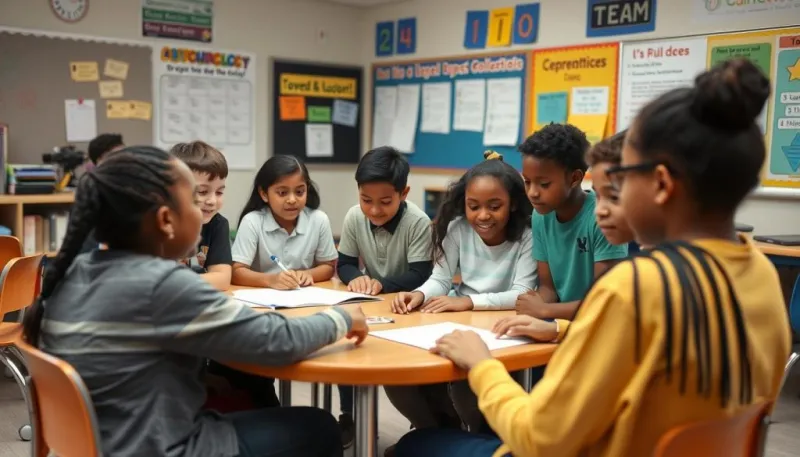
Photo: diverse students studying together in community center classroom, via creditsforteachers.com
Talent is evenly distributed. Opportunity is not. That simple truth has long defined the educational experience for many young people in the Bowe community, where resource gaps, transportation challenges, and economic pressures have conspired to limit what students can realistically achieve. Yet a determined network of local organizations, educators, and advocates is working to rewrite that story—one student at a time.
The Barriers That Hold Students Back
Understanding why educational access remains unequal in the Bowe community requires an honest accounting of the obstacles involved. For many families, the cost of school supplies, extracurricular fees, and standardized test preparation materials represents a meaningful financial strain. Students who work part-time jobs to support their households often arrive in the classroom exhausted, and those without reliable internet access at home find themselves at a compounding disadvantage in an era when homework and research increasingly depend on digital connectivity.
Geography adds another layer of complexity. Bowe residents living in areas underserved by public transit may find that quality schools, tutoring centers, and enrichment programs are technically available but practically out of reach. For students with learning differences or disabilities, the absence of specialized support services within local schools can make academic progress feel like an uphill battle fought without adequate equipment.
These are not individual failures. They are structural gaps that call for structural solutions.
Scholarship Programs Building Real Pathways
One of the most direct interventions addressing educational inequity in the Bowe community has been the expansion of locally administered scholarship programs. Unlike large national awards that often favor applicants from well-resourced schools with polished applications, these initiatives are designed with Bowe students specifically in mind.
The programs emphasize holistic review processes that weigh a student's demonstrated resilience, community involvement, and potential alongside traditional academic metrics. Application support workshops—offered at no cost to participants—help students articulate their experiences and aspirations in compelling terms, leveling a playing field that has historically disadvantaged first-generation college applicants.
For Marcus, a Bowe high school senior who plans to study engineering, a local scholarship award covered not only tuition deposits but also the cost of college visits that would otherwise have been financially impossible. "I didn't know what a campus looked like in person until this program made it happen," he said. "That changed everything about how I thought about my future."
Data gathered from participating scholarship recipients over the past three years indicate that students who receive locally administered awards are significantly more likely to persist through their first year of post-secondary education than the national average for low-income students—a finding that underscores the value of community-centered support structures.
Tutoring Networks Closing the Achievement Gap
Academic support does not end with financial assistance. Recognizing that many Bowe students lack access to private tutoring that families in more affluent communities take for granted, several organizations have established peer-led and professional tutoring networks operating out of community centers, libraries, and faith-based spaces throughout the area.
These programs intentionally recruit tutors who share cultural backgrounds and lived experiences with the students they serve. Research consistently demonstrates that representation matters in educational settings—students are more likely to engage, ask questions, and persist when they see themselves reflected in the people guiding their learning.
One tutoring coordinator described the approach this way: "We are not just filling knowledge gaps. We are building relationships that tell young people they belong in academic spaces, that their questions are worth asking, and that their success is expected, not exceptional."
Subjects covered range from foundational literacy and mathematics to Advanced Placement exam preparation and college-level writing skills. Flexible scheduling, including weekend and evening sessions, ensures that students with work or family obligations can still participate.
School Partnership Models That Deliver Results
Beyond direct student services, some of the most promising work in Bowe's educational ecosystem involves formal partnerships between community organizations and local schools. These collaborations allow nonprofits and advocacy groups to embed resources directly into the school environment rather than requiring students to seek help elsewhere.
In practice, this has meant placing community health liaisons in school buildings to connect families with social services, establishing on-site food pantries that reduce the cognitive burden of food insecurity during the school day, and coordinating after-school programming that keeps students engaged and supervised during the hours when unsupervised youth are statistically most vulnerable to negative outcomes.
Teachers participating in partnership programs have reported meaningful improvements in student attendance and classroom engagement. When basic needs are addressed and families feel supported by the broader community, students are better positioned to focus on learning.
The Economic Case for Educational Investment
Advocates for educational access in the Bowe community are careful to frame their work not merely as a moral imperative—though it certainly is—but also as a sound long-term economic strategy. Research from institutions including the Brookings Institution and the Annie E. Casey Foundation consistently demonstrates that every dollar invested in early childhood and K-12 education generates substantial returns in the form of higher lifetime earnings, reduced reliance on public assistance, and lower rates of involvement in the criminal justice system.
For the Bowe community specifically, raising educational attainment levels creates a stronger local workforce, supports entrepreneurship, and expands the tax base in ways that benefit all residents. The students succeeding through these programs today are the professionals, business owners, and civic leaders who will shape the community's future.
A Shared Responsibility
The progress being made in Bowe's educational landscape is real, but it remains fragile. Sustaining and expanding these initiatives requires continued investment from local philanthropists, government partners, and community members who understand that the success of Bowe's young people is inseparable from the success of the community as a whole.
At Support Bowe, we believe that every student in this community deserves the tools, encouragement, and opportunity to reach their full potential. The work of opening classroom doors—literally and figuratively—is work that belongs to all of us.