Investing in Young Voices: The Case for Mentorship as the Bowe Community's Most Powerful Long-Term Strategy
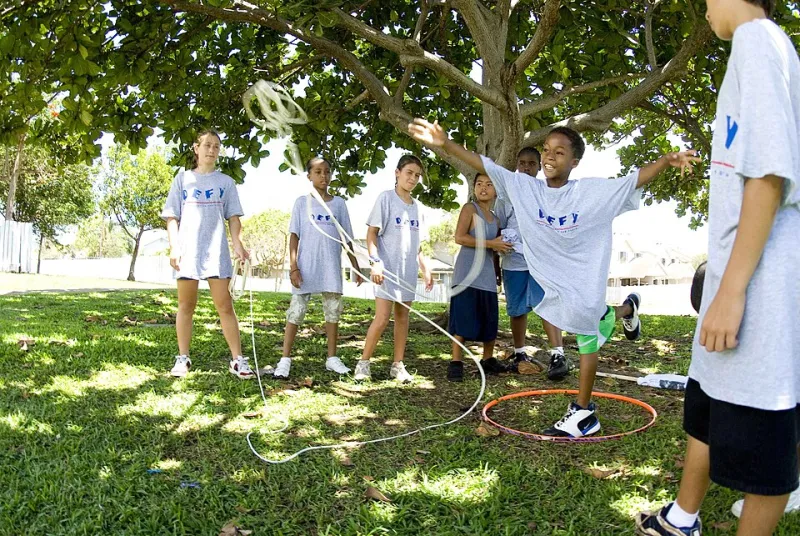
Photo: U.S. Navy photo by Mass Communication Specialist 3rd Class Paul D. Honnick, Public domain, via Wikimedia Commons
There is a phrase that circulates quietly among youth workers, school counselors, and community organizers across America: one caring adult can change everything. It sounds simple — perhaps even sentimental — until you examine the research behind it. Then it becomes something else entirely: a policy imperative, a moral argument, and a roadmap for transforming communities like Bowe from the inside out.
At Support Bowe, we believe that the most durable investments we can make in this community are not in buildings or budgets, but in people — specifically, in the young people who will inherit, shape, and ultimately define what Bowe becomes. Structured mentorship and youth leadership programs are not peripheral initiatives. They are, we would argue, the most strategically sound commitment a community can make.
What the Evidence Actually Shows
The data on youth mentorship is, at this point, difficult to dismiss. A landmark study by MENTOR, the national mentoring partnership, found that young people who are mentored are 55 percent more likely to enroll in college, 78 percent more likely to volunteer regularly in their communities, and significantly less likely to engage in risky behaviors including substance use and early dropout. These are not marginal improvements — they are transformative shifts in life trajectory.
Beyond academic outcomes, the psychological literature reveals something equally compelling. Dr. Jean Rhodes, a leading researcher at the University of Massachusetts Boston, has documented how sustained mentoring relationships activate what she calls developmental scaffolding — a process by which young people gradually internalize the confidence, problem-solving frameworks, and relational skills modeled by their mentors. In communities where other forms of institutional support may be inconsistent or underfunded, this scaffolding can be the difference between resilience and rupture.
For the Bowe community specifically, where many young residents face compounding stressors — economic instability, under-resourced schools, and limited professional networks — mentorship does not simply supplement existing support systems. In many cases, it constitutes the primary one.
Peer Mentoring: An Underutilized Multiplier
While adult-to-youth mentorship remains the most widely studied model, the Bowe community has an opportunity to amplify impact through intentional investment in peer mentorship — programs in which slightly older youth guide their younger counterparts. The benefits of this approach are both practical and profound.
From a practical standpoint, peer mentors are more numerous and more accessible than adult volunteers. A high school junior who has successfully navigated college applications can speak with authentic authority to a ninth grader in a way that a well-meaning adult professional simply cannot replicate. The shared cultural context, the proximity of experience, and the absence of power differentials create a relational dynamic that is uniquely effective.
Psychologically, peer mentoring benefits both parties. Research published in the Journal of Community Psychology consistently demonstrates that peer mentors experience gains in leadership confidence, academic engagement, and prosocial behavior at rates comparable to — and sometimes exceeding — those of their mentees. In the Bowe context, this means that investing in peer mentorship programs effectively doubles the return: one program, two sets of beneficiaries.
Spotlighting What Is Already Working in Bowe
It is important to acknowledge that Bowe is not starting from zero. There are young leaders already operating within this community — organizing study groups, coaching younger siblings, leading youth ministry programs, and managing social media campaigns for local causes — often without formal recognition or institutional support.
Several structured programs have begun to formalize this energy. Youth leadership cohorts that convene monthly, pairing participants with professional mentors across fields including healthcare, law, technology, and education, have demonstrated measurable gains in participants' sense of belonging and future orientation. Summer leadership institutes that combine civic education with hands-on community project development have produced young people who return to their schools with both skills and a heightened sense of responsibility toward their neighbors.
Support Bowe is proud to serve as a connector and amplifier for these efforts — helping programs access funding, navigate organizational development, and measure their impact in ways that attract sustained investment.
Breaking Cycles Requires Systems Thinking
The phrase breaking cycles is frequently invoked in discussions of community development, but it is worth being precise about what this means and why it matters. Cycles of poverty, underemployment, and civic disengagement are not the result of individual failure — they are the predictable outcomes of systems that have historically denied certain communities access to networks, capital, and opportunity.
Mentorship disrupts these cycles not by pretending the systems do not exist, but by equipping young people with the relational capital and navigational knowledge to move through — and ultimately change — those systems. A Bowe teenager who has been mentored by a local attorney understands how professional networks function. A young person who has completed a leadership cohort knows how to speak at a public meeting, draft a proposal, and build a coalition. These are not soft skills — they are power skills, and they have historically been distributed inequitably.
When the Bowe community invests in youth mentorship at scale, it is not simply helping individual young people succeed. It is deliberately redistributing access to the social infrastructure that determines who gets to lead, who gets to decide, and who gets to benefit from civic and economic progress.
The Community's Role: Beyond Good Intentions
Advocating for youth mentorship is easy. Sustaining it requires something harder: consistent, collective commitment from adults across the Bowe community — not just from professional youth workers and nonprofit staff, but from business owners, faith leaders, retired professionals, and everyday neighbors.
The research is clear that mentoring relationships are most effective when they are sustained over time — at minimum, one year of regular contact. This means that the community's role is not simply to launch programs but to remain present within them. It means showing up to monthly meetings even when schedules are full. It means following up with a young person after their job interview. It means treating the development of Bowe's youth as a shared civic responsibility rather than someone else's departmental mandate.
Support Bowe calls on community members to consider how they might contribute — whether as formal mentors, program volunteers, financial supporters, or simply as adults who take the time to acknowledge and encourage the young people they encounter in their daily lives.
A Long-Term Vision Worth Fighting For
The outcomes of today's youth mentorship investments will not appear in next quarter's report. They will appear a decade from now, when a young woman who participated in a Bowe leadership cohort at age fifteen runs for city council. They will appear when a peer mentor who learned to navigate college applications helps his younger brother do the same. They will appear when the Bowe community looks around and finds that its civic, professional, and cultural institutions are led by people who grew up here, who were invested in here, and who chose to stay.
That is the vision driving Support Bowe's commitment to youth mentorship — not a quick fix, but a generational wager on the extraordinary potential already present in this community. The evidence says it works. The young people of Bowe deserve nothing less than our full investment in making it happen.