Healing on Our Own Terms: How Bowe Residents Are Redefining Mental Wellness from the Ground Up
For generations, mental health care in many communities has been shaped by systems that were never designed with everyone in mind. Clinical frameworks built largely around majority-culture assumptions, geographic barriers to licensed providers, and a persistent cultural silence around emotional struggle have left many residents without adequate support. In the Bowe community, however, something is shifting. Residents, practitioners, and local leaders are not waiting for the broader mental health system to catch up. They are building something new.
This is not a story about crisis. It is a story about agency.
The Weight of Silence
For decades, conversations about mental health in the Bowe community were often conducted in hushed tones, if they happened at all. Residents describe a shared cultural inheritance that equated emotional vulnerability with weakness, or that framed psychological struggle as a private matter to be managed within the family rather than addressed through professional care.
"There was always this idea that you just push through," said one longtime Bowe resident who asked to remain anonymous. "You didn't talk about anxiety or depression. You handled it. And if you couldn't handle it, that said something about your character."
This silence carried real consequences. Untreated depression, anxiety, and trauma did not disappear—they compounded, showing up in strained relationships, diminished workplace performance, and cycles of hardship that crossed generational lines. Community advocates have long argued that the stigma surrounding mental health was not simply a cultural preference; it was also a learned response to systems that had failed or marginalized residents who sought help.
"When people went to traditional providers and felt misunderstood, or when they couldn't afford sessions, or when the nearest therapist was forty minutes away, they stopped trying," explained one community health advocate with more than fifteen years of experience working in the Bowe area. "The system taught people that help wasn't for them. The stigma and the systemic failure fed each other."
Building Bridges Between Culture and Care
The response emerging from within the Bowe community is notable for its intentional fusion of professional mental health knowledge with culturally meaningful structures. Rather than simply replicating conventional therapy models, local practitioners and community organizers are integrating trusted community anchors—faith institutions, neighborhood gathering spaces, and peer networks—into the delivery of wellness support.
One such initiative pairs licensed counselors with community health workers who share cultural backgrounds with the residents they serve. These community health workers serve as navigators, helping individuals understand what therapy involves, reducing the sense of unfamiliarity that often deters first-time engagement, and following up with participants between formal sessions.
"The licensed clinician brings clinical expertise," said one practitioner involved in the program. "The community health worker brings trust. When both are present, people feel seen in a way that a clinical setting alone often can't provide."
Several local faith communities have also opened their doors to mental health programming, hosting workshops on stress management, grief processing, and family communication. These settings carry a legitimacy in the Bowe community that traditional outpatient clinics have sometimes struggled to establish. By situating wellness conversations within spaces that residents already associate with support and belonging, organizers have found that barriers to initial engagement drop considerably.
Young People Leading the Conversation
Perhaps the most striking dimension of Bowe's mental health transformation is the role that young people are playing in driving it. A generation that has grown up with greater exposure to mental health discourse through social media, school-based programs, and peer networks is bringing that openness back into community conversations—and, in many cases, directly challenging the silence that shaped their parents' and grandparents' experiences.
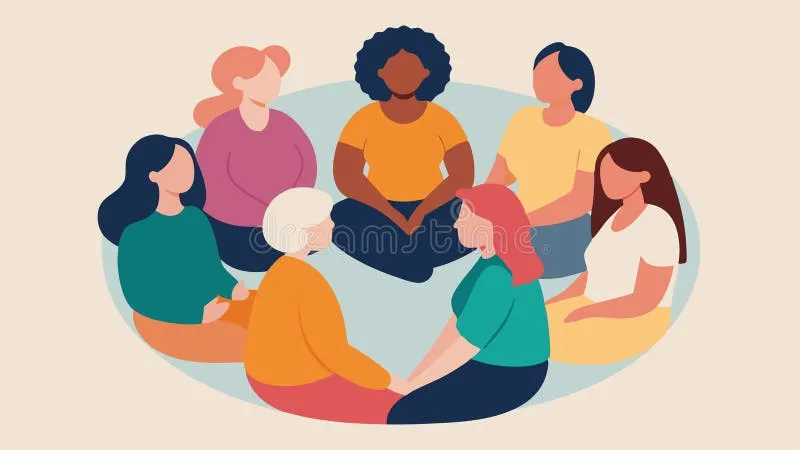
Youth-led wellness circles have emerged in several Bowe neighborhoods, offering structured but informal spaces where young residents discuss emotional challenges, share coping strategies, and connect peers who may be struggling with available resources. These circles are not therapy, and their organizers are careful to distinguish them from clinical services. What they offer instead is normalization—the lived experience of watching peers speak openly about anxiety, grief, or family stress without shame.
"When your friend sits across from you and says, 'I've been really struggling lately,' it changes something," said a young organizer who helped launch one such circle. "It makes it okay to say it yourself. That's the beginning of someone actually getting help."
Support Bowe has observed that these youth-driven efforts are not isolated experiments. They represent a generational shift in how emotional well-being is understood and discussed within the community—a shift that holds significant implications for long-term public health outcomes.
Confronting Structural Barriers Head-On
Cultural change, while essential, is not sufficient on its own. Community leaders are equally focused on the structural obstacles that have historically limited mental health access for Bowe residents. Cost remains the most frequently cited barrier. Even when stigma decreases and individuals seek care, the expense of ongoing therapy places consistent support out of reach for many families.
Advocates are pursuing several parallel strategies to address this. Sliding-scale fee arrangements with local providers have expanded access for lower-income residents. Grant-funded programs have allowed some community organizations to offer free short-term counseling. There is also growing momentum behind efforts to expand Medicaid coverage for mental health services and to increase the number of community mental health centers operating within Bowe's geographic boundaries.
Language access is another dimension of structural equity that advocates are pressing. For residents whose primary language is not English, finding a therapist who can communicate fluently and competently in their language remains genuinely difficult. Multilingual outreach materials and interpreter-assisted sessions represent partial solutions, but community leaders argue that recruiting and training bilingual mental health providers from within the Bowe community itself is a more sustainable long-term answer.
A Redefinition in Progress
What is unfolding in the Bowe community is not a single program or a coordinated campaign. It is something more organic and, arguably, more durable: a community-wide renegotiation of what mental health means, who it is for, and how it is best delivered.
Residents who once would not have used the phrase "mental health" in conversation are now discussing coping strategies with neighbors. Young people are organizing their peers around emotional wellness with the same energy previously reserved for athletic or academic pursuits. Faith leaders are weaving psychological resilience into the fabric of their pastoral care. Practitioners are redesigning their approaches to meet the community where it actually is, rather than where a textbook assumes it to be.
The work is far from finished. Stigma does not dissolve overnight, and structural barriers will require sustained advocacy, policy engagement, and investment to overcome. But the direction is clear.
In the Bowe community, healing is increasingly understood not as something done to residents by outside experts, but as something residents are actively constructing together—on their own terms, in their own spaces, guided by their own values. That shift, more than any single program or policy, may be the most consequential development in the community's long-term well-being.