Nourished and Renewed: Six Ways Food Security Programs Have Transformed Life for Bowe Families
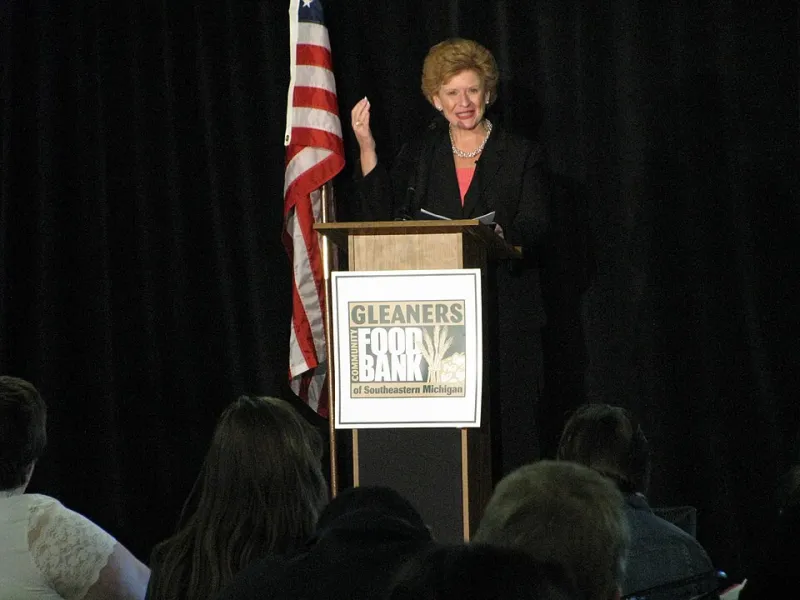
Photo: Senator Stabenow, CC BY 2.0, via Wikimedia Commons
Hunger does not announce itself with a single dramatic moment. For most families experiencing food insecurity in communities like Bowe, it arrives gradually — in the form of stretched grocery budgets, skipped meals quietly absorbed by parents so their children can eat, and the low-grade anxiety of not knowing whether the refrigerator will be full at the end of the month.
Across the United States, approximately 44 million people lived in food-insecure households in 2023, according to the U.S. Department of Agriculture. In underserved communities, those numbers are disproportionately high. But in Bowe, a growing network of food banks, community gardens, and nutrition-focused programs is not only addressing immediate need — it is catalyzing long-term transformation for the families it serves.
The following profiles represent a cross-section of that transformation. Names have been used with permission, and some identifying details have been adjusted to protect privacy.
1. The Single Mother Who Found Stability — and a Career
When Renata first walked into the Bowe Community Food Pantry three years ago, she was working two part-time jobs and still falling short each month. With two children under eight and no reliable childcare, the cost of nutritious food was simply beyond reach.
"I was buying whatever was cheapest," she recalls. "A lot of processed stuff. I knew it wasn't good for them, but I didn't have a choice."
The pantry changed that calculus immediately, providing weekly access to fresh produce, proteins, and staple goods at no cost. But the ripple effects extended well beyond the grocery haul. Through a partnership with a local workforce development organization — facilitated by pantry staff — Renata enrolled in a culinary training program. She is now employed full-time as a prep cook at a regional food service company, with benefits.
"The food gave me breathing room," she says. "That breathing room let me think about what was next."
2. A Grandfather's Garden That Fed a Block
Ernest, 68, had been growing vegetables in a small backyard plot for decades when he learned about the Bowe Neighborhood Garden Initiative, a community-supported program that provides raised bed infrastructure, seeds, and horticultural training to residents with limited growing space.
With the program's support, Ernest expanded his operation significantly — and began distributing surplus produce to neighbors, eventually formalizing the arrangement into a weekly front-porch exchange that now serves roughly thirty households on his block.
"I never thought of myself as doing anything special," he says. "I just had more tomatoes than I could eat."
The garden has also become an intergenerational gathering point. Ernest regularly hosts young people from the neighborhood, teaching them basic cultivation techniques. Several participants have gone on to apply for plots of their own through the Garden Initiative.
3. The Family Whose Health Outcomes Shifted Measurably
For the Okafor family, the consequences of food insecurity were not merely financial — they were medical. Two of their three children had been diagnosed with diet-related conditions, including iron deficiency anemia and elevated blood sugar levels, both of which their pediatrician linked in part to limited access to nutrient-dense foods.
After enrolling in the Bowe Healthy Families Nutrition Program — which provides monthly food boxes tailored to medically specific dietary needs — the family began working with a volunteer registered dietitian to restructure their weekly meals.
Within eighteen months, follow-up bloodwork for both children showed marked improvement. Their mother, Adaeze, credits the program not only with better health outcomes but with reduced medical expenditures.
"We were spending so much on doctor visits and medications," she says. "Now we spend that on better food, and we need fewer visits."
4. The Teenager Who Became a Community Organizer
Jordan was sixteen when he first volunteered at a Bowe food distribution event — initially because a school counselor suggested community service hours. He stayed because the work felt meaningful.
Over the following two years, Jordan moved from volunteer to youth coordinator for the distribution program, helping recruit and train a cohort of twelve peer volunteers. He has since presented the program's model at a regional nonprofit conference and is applying to college with a stated interest in public health policy.
"I didn't know what food insecurity even meant before I started volunteering," he admits. "Now I understand how connected everything is — food, health, economics, education. It all links together."
Jordan's trajectory illustrates a dimension of food security work that is sometimes overlooked: its capacity to develop leadership among young people who engage with it.
5. The Immigrant Family That Found Community
For the Nguyen family, who relocated to Bowe from Vietnam four years ago, food insecurity was compounded by social isolation and language barriers. Navigating public benefit systems in a second language proved overwhelming, and the family initially went without assistance they were entitled to receive.
A bilingual outreach worker affiliated with the Bowe Food Access Coalition helped the family enroll in SNAP, connected them with the pantry, and introduced them to a community cooking group that meets monthly to share recipes and techniques from participants' countries of origin.
"We felt like outsiders," says Lan, the family's eldest daughter, who served as translator during our conversation. "The food programs made us feel like we belonged here."
The cooking group has since grown into one of the most well-attended community events on the Bowe calendar, drawing participants from across the neighborhood regardless of their food security status.
6. The Retiree Who Gave Back After Receiving Help
Gloria, 72, relied on the Bowe Senior Nutrition Program during a period of financial hardship following her husband's illness and subsequent passing. The program provided both meal delivery and a modest monthly food stipend.
Once her circumstances stabilized, Gloria began volunteering with the same program that had supported her — initially answering phones, then coordinating delivery routes, and eventually serving on the program's advisory board.
"They took care of me when I needed it," she says. "The least I can do is make sure they can take care of the next person."
How to Access and Support Bowe's Food Security Network
For residents seeking food assistance, the following entry points are available:
- Bowe Community Food Pantry: Walk-in hours are available three days per week; no documentation required for first-time visitors.
- SNAP Enrollment Assistance: Outreach workers at the Bowe Food Access Coalition can assist with applications in multiple languages.
- Bowe Neighborhood Garden Initiative: Applications for community garden plots open each spring; a waitlist is maintained year-round.
- Bowe Healthy Families Nutrition Program: Referrals accepted from healthcare providers and community organizations.
For those wishing to contribute, opportunities include financial donations, volunteer shifts, and in-kind food drives. Organizations and faith communities interested in hosting a collection point may contact Support Bowe directly through supportbowe.org.
Food security is not a peripheral concern — it is the foundation upon which every other aspiration, economic or otherwise, is built. When Bowe families are nourished, they are positioned to grow. That is the work. And it is far from finished.