Miles from Opportunity: Why Transportation Equity Is the Missing Link in Bowe's Economic Future
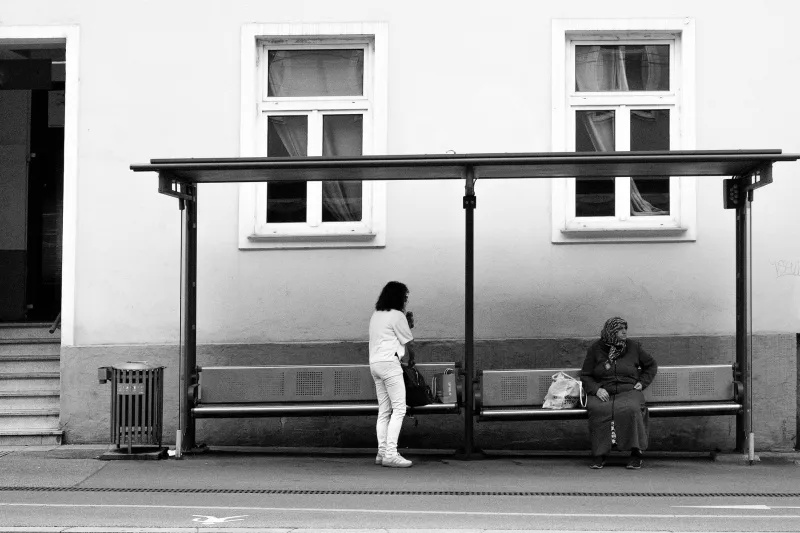
Every morning, before the rest of the city stirs, a significant portion of the Bowe community is already calculating. Not budgets or schedules in the conventional sense, but something far more precarious: whether the bus will arrive on time, whether a transfer will be missed, whether a job interview across town is even worth attempting without a car. For thousands of Bowe residents, transportation is not a convenience—it is a daily negotiation with circumstance.
The consequences of this negotiation ripple outward in ways that rarely appear in economic forecasts or municipal planning documents. Yet transportation inequity may be among the most structurally significant obstacles standing between Bowe families and genuine economic advancement.
The Geography of Exclusion
Transportation access is, at its core, a question of geography—and in communities like Bowe, geography has long been shaped by historical patterns of disinvestment. Residential areas with high concentrations of low-income households are frequently the last to receive transit upgrades and the first to absorb service cuts when budgets tighten. The result is a patchwork of coverage that leaves entire neighborhoods functionally disconnected from the broader regional economy.
For Bowe residents without personal vehicles, this disconnection is not abstract. It manifests as a two-hour commute to a job that pays ten dollars an hour—a commute that consumes so much time and energy that maintaining consistent employment becomes genuinely difficult. It appears in the form of a medical appointment canceled because the return bus does not run late enough to account for a doctor's office running behind schedule. It surfaces when a student misses a community college class because a storm delayed the only route serving her neighborhood.
These are not isolated anecdotes. They are structural patterns repeated across the Bowe community with enough regularity to constitute a systemic barrier.
When a Bus Route Changes a Life
Consider the experience of a Bowe resident—a single mother of two—who spent nearly three years working a part-time retail position close to her home because the transit options connecting her neighborhood to the commercial corridors where full-time work was available were simply too unreliable. When a community-advocated route extension brought expanded bus service to her street, she applied for and secured a full-time position with benefits at a distribution facility several miles away. Within eighteen months, she had enrolled in a workforce certification program offered through a regional employer partnership.
Her story is not exceptional in its aspiration—it is exceptional only in that the infrastructure finally caught up with her ambition. Across the Bowe community, similar potential sits dormant, waiting not for motivation or talent but for the basic infrastructure that transforms possibility into reality.
The Compounding Cost of Getting Nowhere
The economic toll of inadequate transportation extends well beyond lost wages. Families without reliable transit often pay a significant premium for goods and services. Grocery options near transit-poor neighborhoods tend to be limited and more expensive, contributing to both food insecurity and strained household budgets. Healthcare is deferred, leading to more costly interventions down the road. Small business owners in Bowe who depend on foot traffic suffer when customers cannot easily reach their storefronts.
There is also the less visible cost of time. Research consistently demonstrates that low-income workers spend a disproportionately large share of their day in transit, leaving less time for family, education, community engagement, and rest. This temporal poverty compounds financial poverty in ways that are difficult to quantify but impossible to ignore.
For Bowe's workforce development ecosystem, transportation gaps represent a genuine structural impediment. Employers report difficulty retaining workers who cannot reliably navigate the distance between home and job site. Workforce training programs find that attendance drops sharply when participants must navigate multiple transfers or pay for rideshare services that consume a meaningful portion of their daily earnings.
Community-Driven Solutions Gaining Ground
Across the country, communities facing similar challenges have begun to pioneer transportation solutions that do not wait for large-scale infrastructure investment. Several of these models are gaining traction in and around the Bowe area.
Ride-share cooperatives—community-owned transportation networks that prioritize affordability and coverage in underserved areas—have emerged as a promising complement to conventional public transit. Unlike app-based services that concentrate service in high-demand, higher-income neighborhoods, cooperative models are designed with equity as a founding principle.
Employer-partnered shuttle programs have also demonstrated meaningful results. When regional employers collaborate with community organizations and transit authorities to fund dedicated routes connecting residential areas to job sites, both retention and recruitment outcomes improve. Support Bowe has been actively engaged in conversations with local employers and municipal partners to explore the feasibility of such arrangements within the Bowe corridor.
Additionally, community advocacy for fare reform has gained momentum. Sliding-scale transit passes and income-based fare structures have been adopted in several major U.S. cities and have shown measurable impact on ridership among low-income populations. Bowe community advocates have been vocal in calling for similar considerations at the regional transit authority level.
Infrastructure Investment as Economic Policy
Perhaps the most important reframe needed in conversations about transportation equity is this: transit investment is not a social service—it is economic policy. Every dollar invested in connecting Bowe residents to jobs, education, and healthcare generates returns across the economic ecosystem. Workers who can reliably reach employment contribute to local tax bases. Students who can access educational institutions build skills that strengthen the regional workforce. Patients who can reach preventive care reduce long-term healthcare costs borne by the broader system.
Viewing transportation through this lens shifts the conversation from charity to investment, from peripheral concern to central priority. It positions the Bowe community not as a recipient of goodwill but as an economic asset whose full potential is currently being constrained by solvable infrastructure problems.
Moving Forward Together
Support Bowe recognizes that transportation equity is inseparable from the broader mission of economic development within the community. Advocacy efforts are ongoing at the municipal and regional level, pushing for expanded route coverage, improved scheduling reliability, and fare structures that do not penalize residents for living in historically underserved areas.
At the same time, Support Bowe is working to connect residents with existing transportation assistance resources, including subsidized transit programs, employer shuttle partnerships, and community ride-share initiatives currently available in the region.
The road to economic opportunity in the Bowe community runs through real streets, real bus stops, and real infrastructure decisions made by planners, elected officials, and civic leaders. Ensuring that those decisions reflect the needs and aspirations of Bowe residents is not a peripheral concern—it is foundational work. And it is work that this community, together, is committed to seeing through.